
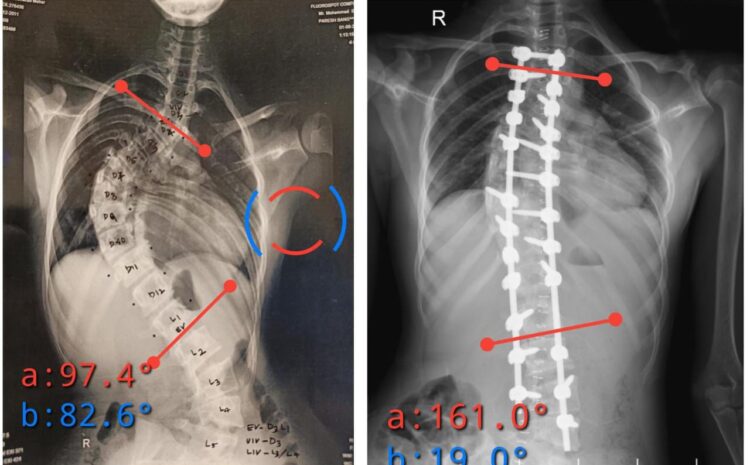
Correction of a Severe 90° Spinal Curve with Pedicle Subtraction Osteotomy
Severe spinal deformities can significantly affect posture, balance, mobility, and overall quality of life. In cases where the spinal curve becomes extremely pronounced, advanced surgical techniques may be required to restore proper alignment. This case highlights the successful correction of a long 90-degree spinal curve using pedicle subtraction osteotomy, multilevel facetectomy, and long segment fixation.
Understanding Severe Spinal Curvature
A spinal curve measuring 90 degrees is considered a severe deformity. As the curvature progresses, it can lead to noticeable posture abnormalities, back pain, reduced flexibility, and difficulty performing daily activities.
Furthermore, severe spinal deformities may continue to worsen over time if not treated appropriately. Therefore, early assessment by an experienced spine surgeon is essential.
Patient Case Overview
The patient presented with a long-standing spinal deformity characterized by a severe 90-degree curve. Due to the rigidity and extent of the deformity, surgical intervention was recommended to improve spinal alignment and prevent further progression.
Following a detailed clinical evaluation and imaging studies, a comprehensive surgical plan was developed to achieve optimal correction.
Surgical Treatment Performed
Pedicle Subtraction Osteotomy (PSO)
Pedicle subtraction osteotomy is an advanced spinal correction procedure used to treat severe and rigid spinal deformities. During this procedure, a wedge-shaped portion of the vertebra is removed to allow realignment of the spine.
As a result, significant correction can be achieved while improving overall spinal balance.
Multilevel Facetectomy
Facetectomy was performed at multiple levels to release stiff spinal segments and increase flexibility. Consequently, the surgeon was able to achieve a more effective correction of the deformity.
Long Segment Fixation
Following correction, long segment fixation was used to stabilize the spine. Specialized implants and rods were placed to maintain the corrected alignment and support healing.
Additionally, long segment fixation provides long-term stability and reduces the risk of future deformity progression.
Benefits of Surgical Correction
Advanced spinal deformity correction offers numerous benefits, including:
- Improved spinal alignment
- Better posture and balance
- Reduced risk of curve progression
- Enhanced mobility
- Improved quality of life
- Long-term spinal stability
Moreover, modern surgical techniques allow for precise correction of even the most complex spinal deformities.
Recovery After Surgery
Recovery following spinal deformity surgery involves careful monitoring, rehabilitation, and regular follow-up visits. Patients are encouraged to follow their surgeon’s recommendations regarding activity levels and physical therapy.
Furthermore, consistent follow-up helps ensure proper healing and maintenance of spinal alignment.
Why Timely Treatment Matters
Severe spinal curves can continue to progress and may eventually affect overall body mechanics. Therefore, timely intervention is crucial for preventing complications and achieving the best possible outcome.
Early treatment can improve function, appearance, and long-term spinal health.
Conclusion
This case demonstrates the successful correction of a severe 90-degree spinal curve using pedicle subtraction osteotomy, multilevel facetectomy, and long segment fixation. Through advanced spinal deformity surgery, significant improvement in alignment, stability, and posture was achieved. As a result, the patient gained better spinal balance and an improved quality of life.
Write a Comment