
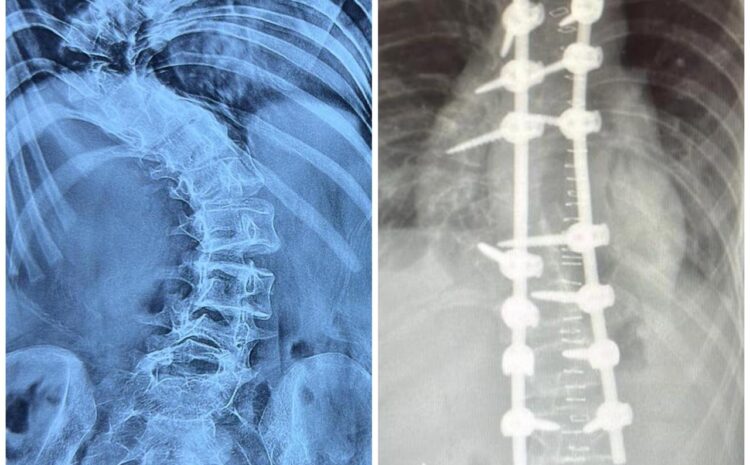
Correction of Acute Hairpin Thoracic Curve with Corpectomy and Laminectomy
Severe spinal deformities can significantly affect posture, mobility, and overall quality of life. Among the most challenging conditions is an acute hairpin bend of the thoracic spine, where the spinal curve becomes extremely sharp and rigid. Such complex deformities often require advanced surgical techniques to restore alignment and improve spinal balance.
This case highlights the successful correction of an acute hairpin thoracic curve using corpectomy, posterior laminectomy, and multilevel facetectomy.
Understanding an Acute Thoracic Spine Deformity
The thoracic spine forms the middle portion of the back and plays a vital role in maintaining posture and supporting the rib cage. However, when a severe spinal deformity develops, the curve can become extremely sharp, creating what is often described as a hairpin bend.
As the deformity progresses, patients may experience:
- Significant spinal imbalance
- Visible back deformity
- Poor posture
- Back pain and stiffness
- Reduced spinal flexibility
- Difficulty performing daily activities
Therefore, early evaluation and treatment are essential to prevent further progression.
Patient Case Overview
The patient presented with a severe and rigid thoracic spinal deformity characterized by an acute hairpin bend. Due to the complexity of the curve and its rigidity, surgical correction was necessary to restore proper spinal alignment.
Following detailed clinical assessment and advanced imaging studies, a comprehensive surgical plan was developed to achieve safe and effective correction.
Surgical Procedure Performed
Corpectomy
Corpectomy involves the removal of a portion of the vertebral body causing the deformity. This advanced procedure creates space for spinal realignment and allows significant correction of rigid curves.
As a result, the surgeon can effectively reduce severe angular deformities and improve spinal balance.
Posterior Laminectomy
A posterior laminectomy was performed to decompress the spinal canal and increase flexibility within the affected spinal segments.
Furthermore, this procedure helps facilitate safer correction while reducing pressure on neural structures.
Multilevel Facetectomy
Facetectomy was carried out at multiple spinal levels to release stiff joints and improve spinal mobility.
Consequently, greater curve correction was achieved while maintaining spinal stability.
Spinal Stabilization
After deformity correction, spinal instrumentation and fixation were used to secure the spine in its corrected position and promote long-term stability.
Benefits of Surgical Correction
Advanced spinal deformity surgery offers several advantages, including:
- Improved spinal alignment
- Better posture and body balance
- Increased spinal stability
- Reduced progression of deformity
- Enhanced mobility and function
- Improved quality of life
Moreover, modern spine surgery techniques allow surgeons to address even highly complex deformities with greater precision and safety.
Recovery and Rehabilitation
Recovery following thoracic spine deformity correction requires careful monitoring and rehabilitation. Patients typically undergo regular follow-up evaluations to assess healing and maintain spinal alignment.
Additionally, guided rehabilitation programs help improve strength, mobility, and overall recovery.
Why Early Treatment Matters
Severe thoracic spinal deformities can worsen over time and may eventually affect overall body mechanics and physical function. Therefore, timely intervention is critical for achieving the best possible outcomes.
Early diagnosis and expert surgical management can significantly improve both functional and cosmetic results.
Conclusion
This case demonstrates the successful correction of an acute hairpin thoracic curve through corpectomy, posterior laminectomy, and multilevel facetectomy. Through advanced spinal deformity surgery, significant improvement in spinal alignment, stability, and posture was achieved. As a result, the patient experienced better spinal balance and an improved quality of life.
Write a Comment